The Rise of Artificial Intelligence
Topics in Economics, ESCP, 2025-2026
Introduction
Will only appear in HTML.
How do you see the future of AI ?
. . .

. . .
- Science Fiction has explored many issues associated with AI.
- what happens to individuals, markets, firms, government?
- who wins, who loses?
- Very often economic future is bleak…
- Why is that so?
What is AI?
A simple definition (enough for this course)
AI is a set of methods that learns from data to produce useful outputs (predictions, classifications, text/images, actions).
- Key idea: it improves with experience/training, not just explicit rules
- We do not need AI to “think like a human” for it to matter economically
Why it is hard to say what AI will never do
Two recurring facts:
- The frontier moves: tasks once seen as “uniquely human” become routine (translation, chess, image recognition, writing)
- Our labels move too: once a task is solved reliably, we stop calling it “AI”
- (Tesler’s theorem / “AI is whatever hasn’t been done yet”)
. . .
So claims like “AI will never do X” usually age badly.
What we can be more confident about
Even if we cannot bound capabilities, we can analyze economic mechanisms:
- which tasks become cheaper (prediction, drafting, search, monitoring)
- which inputs become valuable (data, compute, human attention)
- who captures rents (owners of complements and bottlenecks)
The Classical View
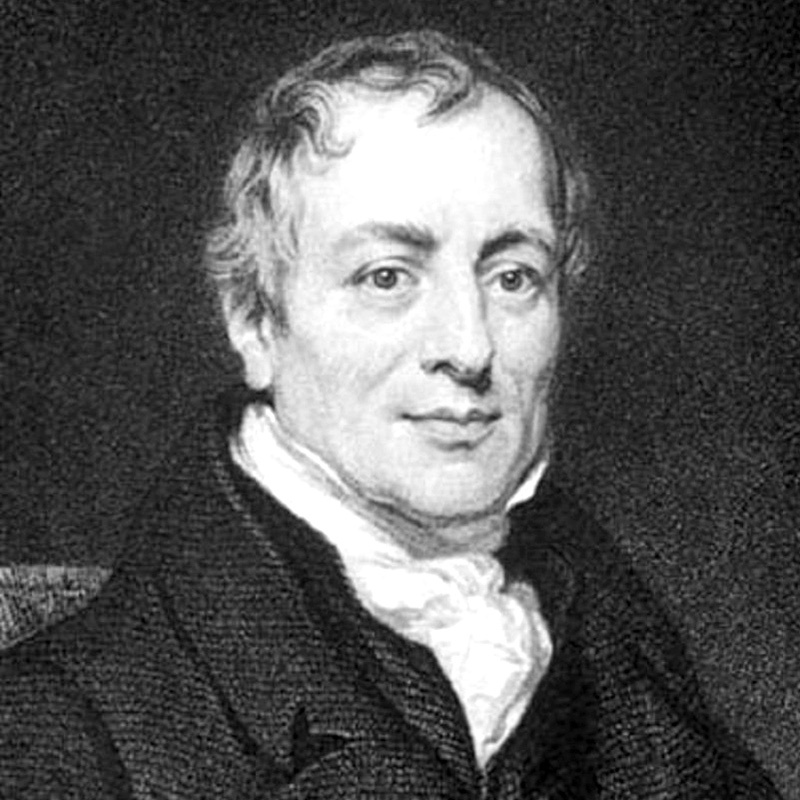
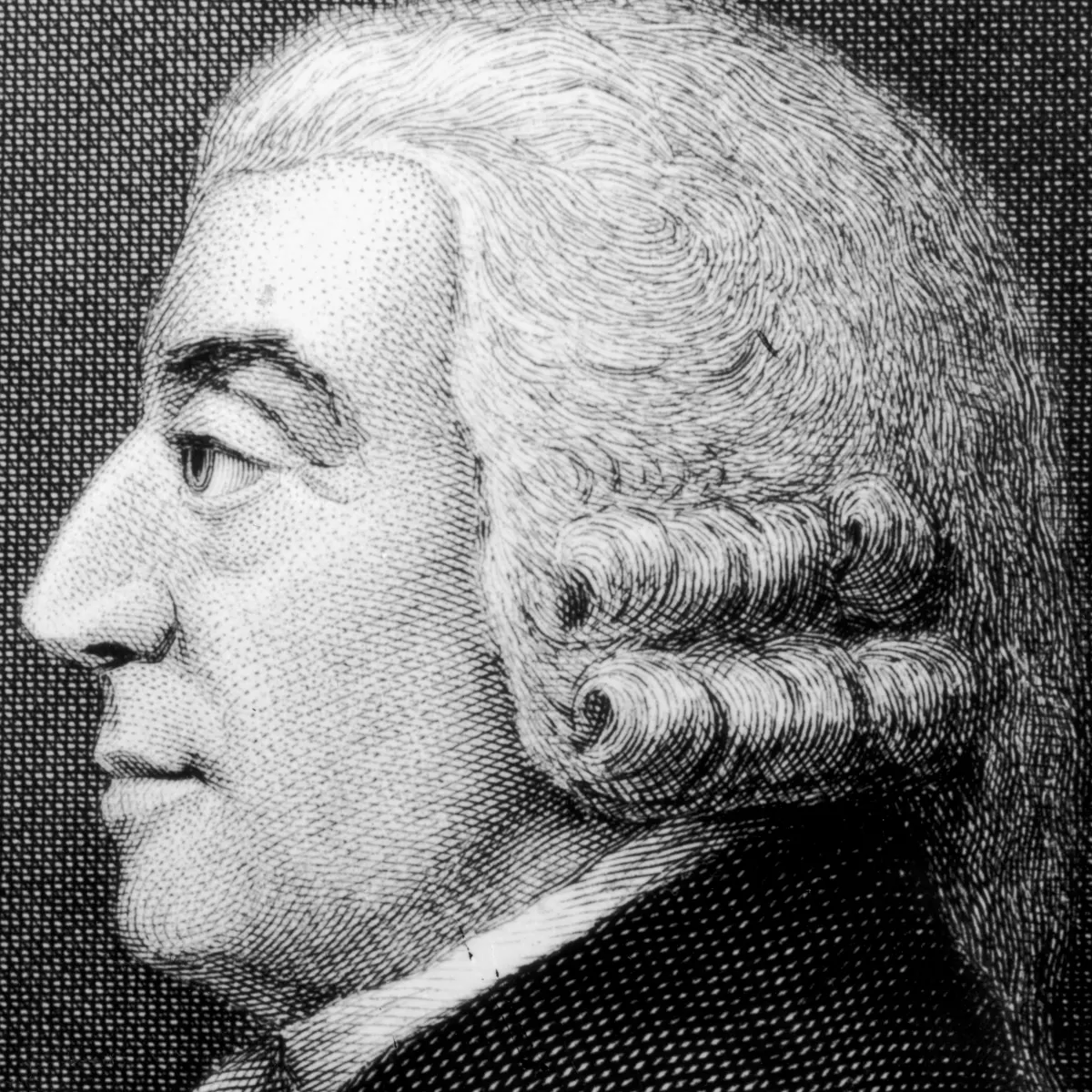
“This Time it’s Different” or “Same old, same old…”?
. . .
Do you remember the neoclassical production function?
The (neo)classical production function
What are its main properties?
- production takes several factors as inputs
- capital
- labour
- … (natural resources, land, …)
- each factor has a market price
- marginal returns w.r.t. each factor are decreasing
- factors are paid according to their marginal productivity
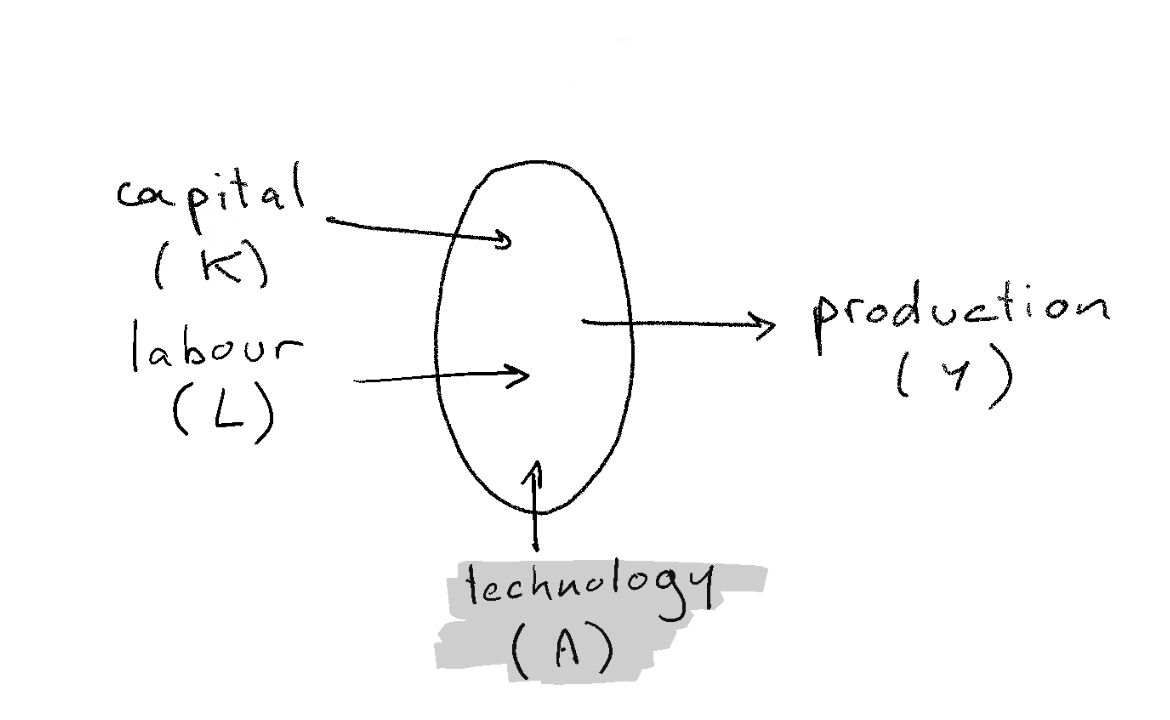
- the technology is the particular process through which inputs are combined
AI and the (neo)classical production function
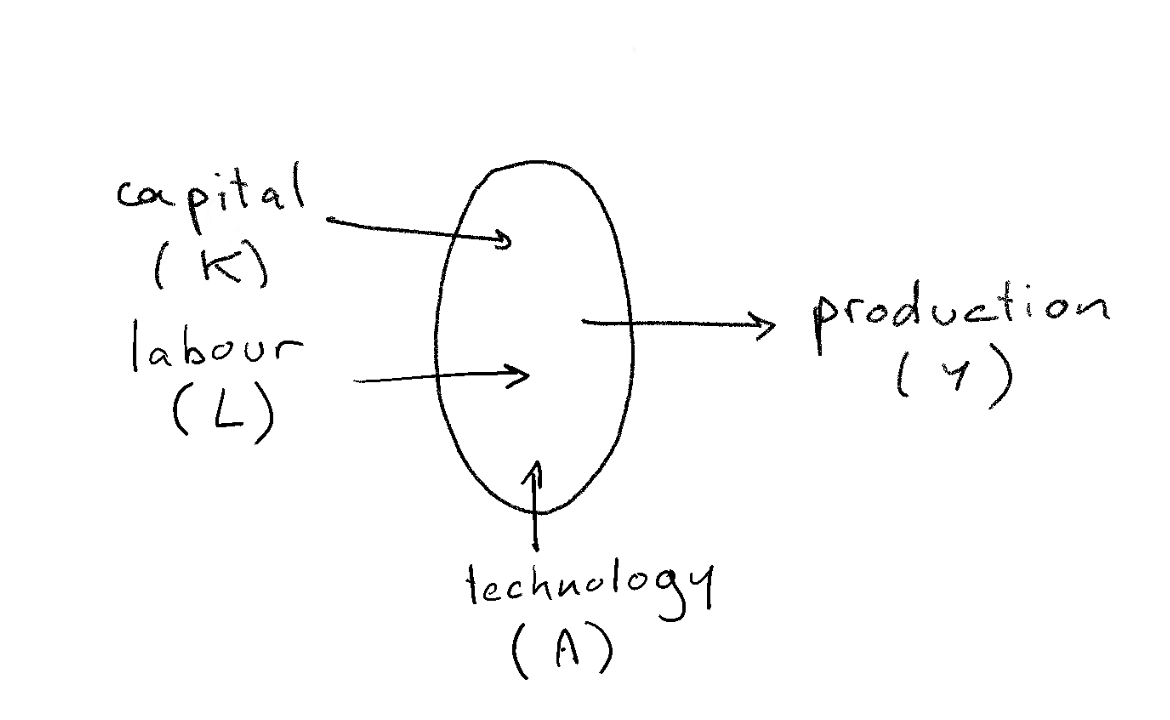
- the precise description depends on the problem under consideration
- what could you change to take into account the effect of AI?
- data, technological change ?
Three hypotheses about the economic nature of AI
- A technological change
- A new kind of factor: Data
- Yet another kind of factor: Robots
- Something else Completely
AI is a change in the cost structure
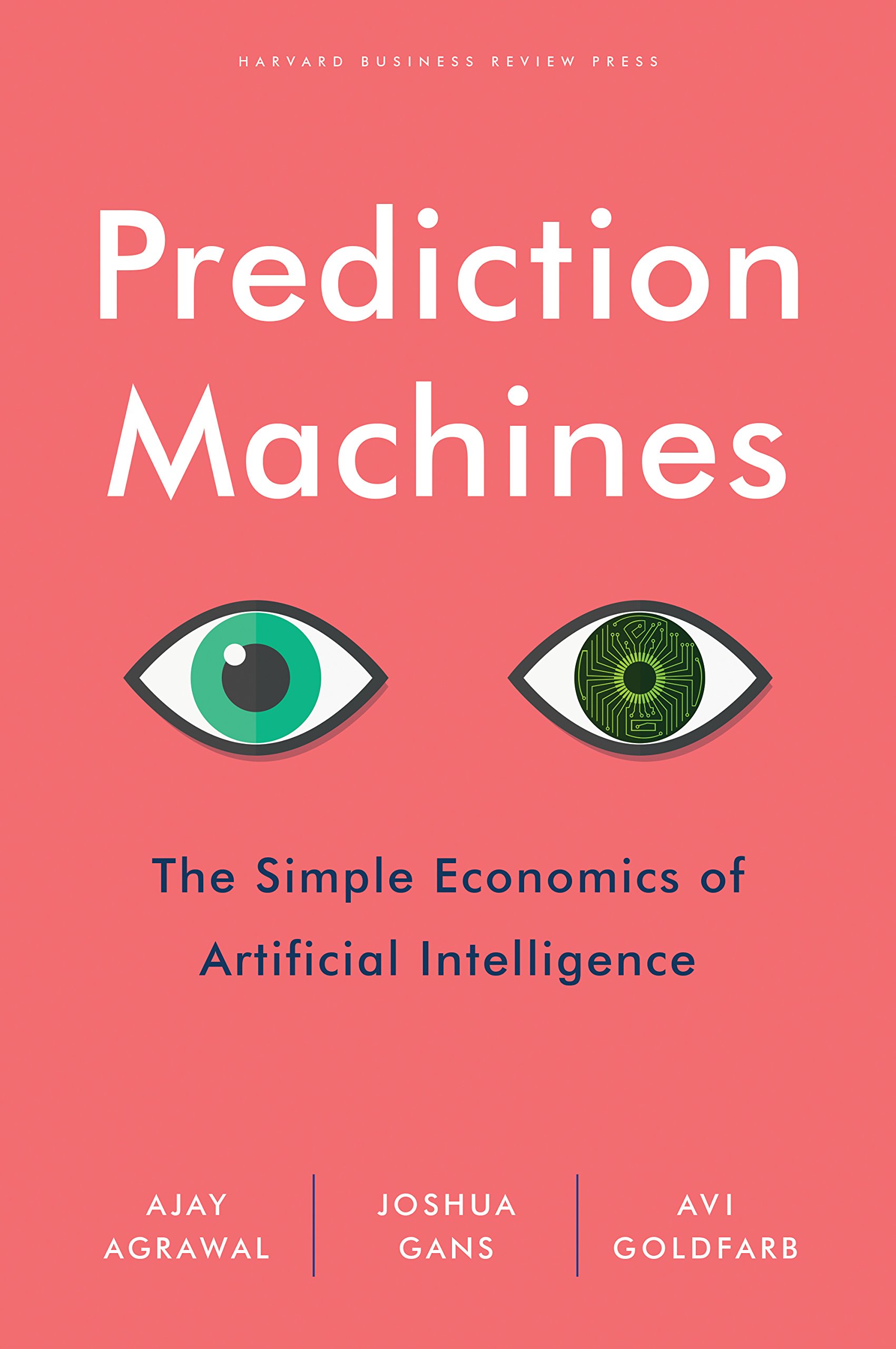
Ajy Agrawal, Joshua Gans and Avi Goldfarb: Prediction Machines: The Simple Economics of Artificial Intelligence 2018
Prediction Machines
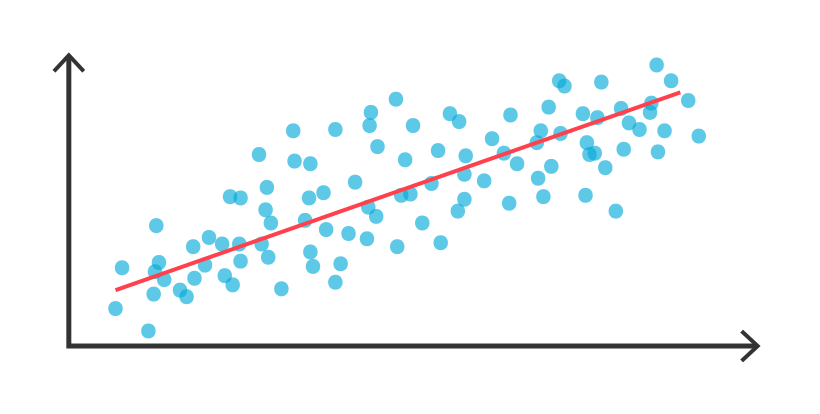
- many production tasks can be formulated as prediction problems
- examples:
- regression, classification: predict Y as a function of X
- student -> pass or fail ?
- should I invest in A or B ?
- even chatbot: what is the appropriate continuation for an ongoing conversation?
Will I lose my job ?
- AI is a decrease in the cost of predictions
- The demand for all prediction-intensive tasks will rise (law of demand)
- The salary of workers with prediction-intensive tasks will rise (market price)
- Value of other tasks will fall (general equilibrium effect)
- More precisely:
- demand for tasks that are substitute to predictions will be low
- demand for tasks that are complement to predictions will be high
A simple tasks-model framing (why employment effects are ambiguous)
- Jobs are bundles of tasks; AI rarely replaces entire occupations at once
- If AI substitutes for tasks you do, your marginal product may fall
- If AI complements tasks you do (e.g., better targeting, better diagnostics), your marginal product may rise
- Aggregate employment depends on substitution, new tasks/products, demand expansion, and reallocation frictions
- Distributional effects (who owns the complements/data/capital) are usually first-order
. . .
👉 More on it next week.
AI is Data
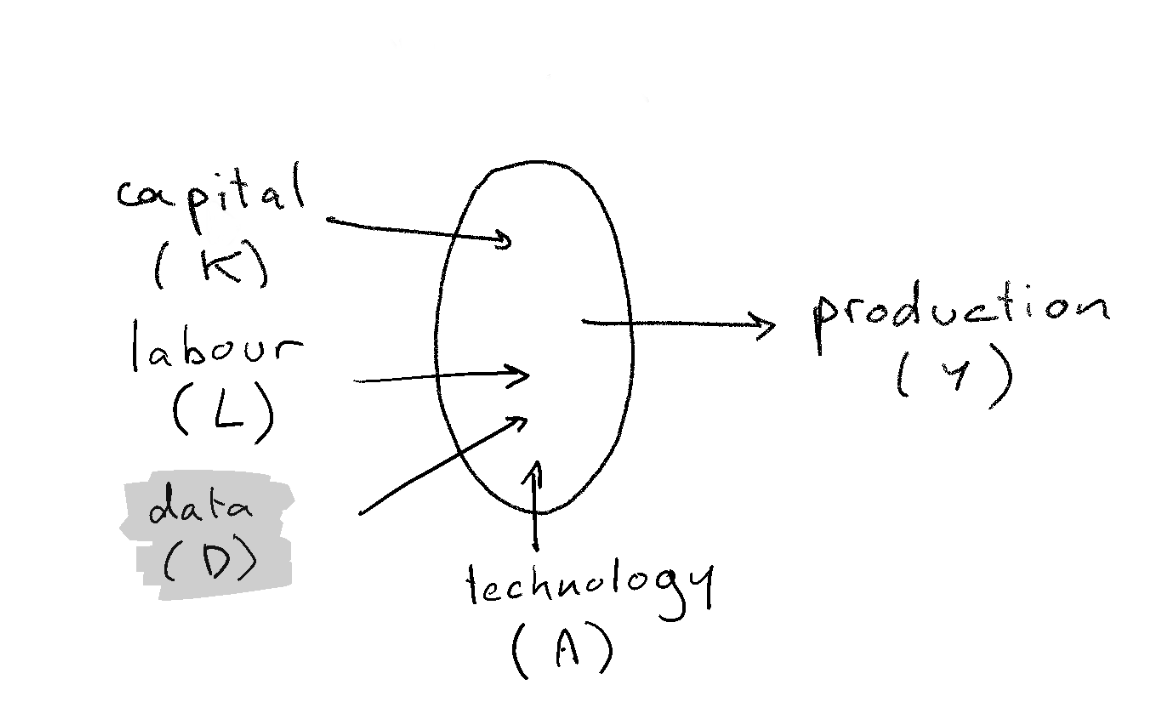


Chad Jones and Christopher Tonetti (Stanford) Nonrivalry and the Economics of Data (Sep 2020, American Economic Review)
Data is a factor not a technology
- Data is a factor, not a technology
- Can you explain it ?
- The difference between an idea and a factor? Examples:
- idea: use machine learning to build self driving cars
- factor: each car-maker gathering his own data to train cars
- Data (even anonymous) improves quality of existing products
What kind of good is data ?
- Remember the classification of goods?
- nonrival: can be used with leftovers
- excludable: use can be limited to paying customers
- data is a: club good
- Nonrivality implies
- increasing returns to scale
- 🤔: check why
- marginal value of new data increases more than proportionally
AI: adds data to the production function (consequences)
- increasing returns to scale implies natural monopoly
- ->GAFAMs
- increasing suboptimal monopoly rents (already a problem before existence of AI…)
- should you regulate a monopoly?
- it depends what is the barrier to entry: data-gathering or data-processing (cloud)
- other relevant questions
- where are the markets? (empirically seems to be “undertraded”)
- who owns the data ? Consumer, producer.
How do you regulate a Data-monopoly ?
- solutions:
- split the monopolies (if deadweight loss is too big)
- outlaw data gathering (big productivity loss)
- force data-sharing: make it a public good
- let the consumer be free to decide whether to rent their data (remove externalities)
AI: competition between humans and robots
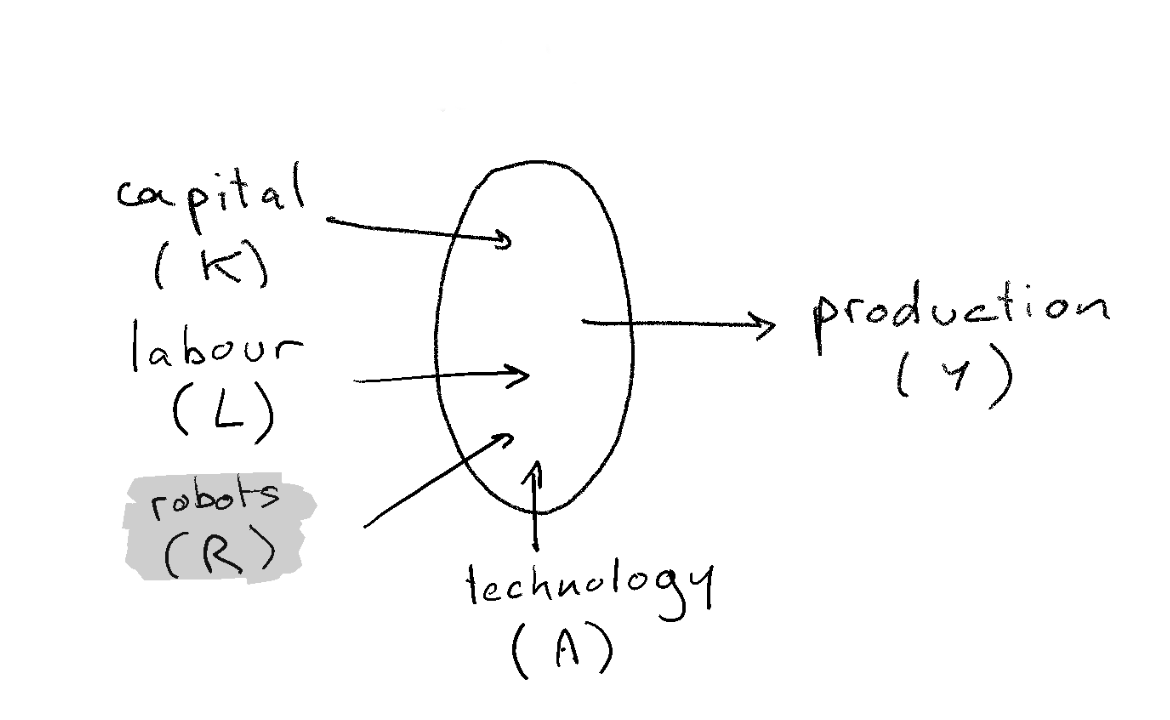
Economic singularity
- In the very long run, could technology be bad?
- Recall the neoclassical world
- market economy
- technological progress reduces production cost
- always good for consumers. Increase (real) total income.
- becomes an inequality problem
- But
- whether technology reduces salaries depends on whether growth is labour augmenting or capital augmenting
- if AI is a close enough substitute for labour, salaries of “humans” as a whole are at risk
- there is an economic singularity when the wage of humans falls below the subsistence level

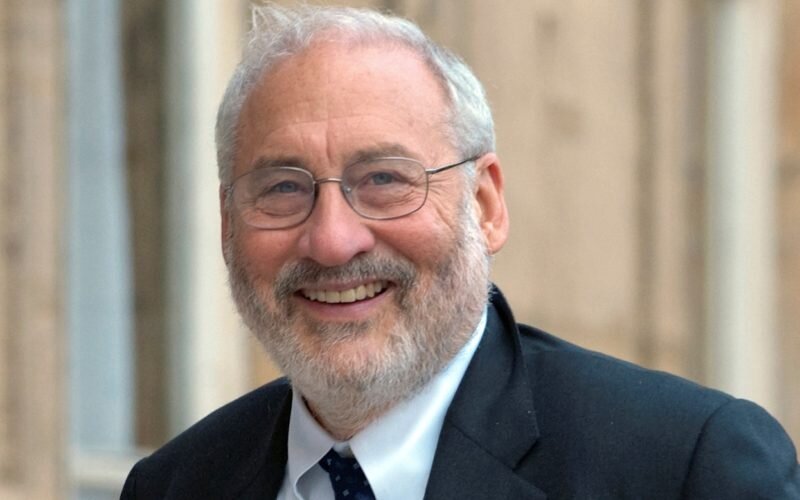

- Two sets of authors reach very similar conclusions
- Anton Korinek and Joseph Stiglitz (left): more complete/technical
- Gilles Saint Paul (right): more political economy
Some very long run scenarios
- Analysis taken from Gilles Saint Paul
- Main hypothesis: all humans can be replaced by more productive robots
- Comparative advantage logic:
- humans specialize in work where their comparative disadvantage is lowest (services, art, crafting…)
Scenario 1: society redistributes income from robots
Four political subscenarios:
Welfare state
- robot-owners are taxed, income is redistributed
- for instance as universal income
- some productivity losses
- what about international competitiveness?
Rentiers society
- robot owners invest the rent over many generations
- capital concentration increases
Neo-Fordism
- firms pay huge salaries for essentially useless jobs (powerpoint presentations, 😉 …)
- useful to sustain demand
New roman empire
- robot owners: patricians (top 2%)
- rest of population: plebeians
- survive thanks to clientelism
- robots: slaves
Scenario 2: wars, starvation, epidemic
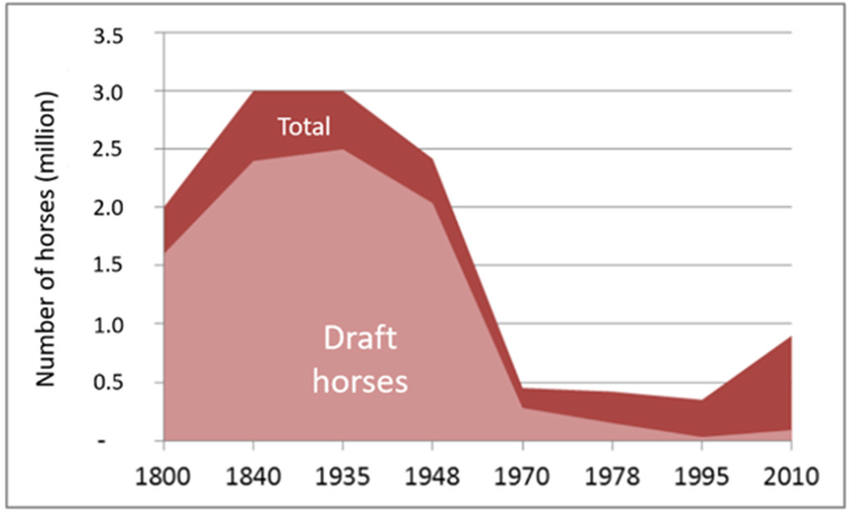
- human income (marginal productivity) falls below subsistance levels
- malthusian effect: population growth decreases
- not unheard of (Leontief): consider population of draft horses
Scenario 3: the Matrix

- human wage decrease
- subsistence level decreases dramatically too
Something Else Completely?
- Right now AI is a technology (or a factor)
- What if it becomes another intelligent agent?
- has its own goals
- its own preferences
- with superhuman thinking abilities…
- Response in the literature (if curious):
- Anton Korinek: if market economy survives
- malthusian and non-malthusian scenarios
- At that stage humans might be something different completely
- transhumanism
- Anton Korinek: if market economy survives
Conclusion
- Research on AI is very speculative: especially about the long run
- But concepts from classical economics still help
- Very important assumption: “if market economy survives”
- For next time:
- make sure you understand all concepts in bold
More Readings
Chad Jones and Christopher Tonetti: Nonrivalry and the Economics of Data, American Economic Review
Avi GoldFarb: Prediction Machines: The Simple Economics of Artificial Intelligence 2018
Gilles Saint Paul: Robots Vers la fin du travail ?
Anton Korinek, Joseph E. Stiglitz: Artificial Intelligence and Its Implications for Income Distribution and Unemployment, chapter in Artificial Intelligence and Its Implications …, NBER
- also on coursera